
Understanding Workplace Productivity
Improving workplace productivity is crucial for businesses striving to remain competitive in today’s dynamic market. Productivity is not merely about working harder but about working smarter. It involves maximizing output from existing resources, including time, workforce, and technology.
Assessing Current Productivity Levels
Before implementing any productivity strategies, it is essential to assess the current productivity levels within your organization. This can involve analyzing workflow processes, employee performance metrics, and identifying any bottlenecks. Conducting regular assessments allows for focused improvements and prevents unnecessary resource expenditure. An accurate assessment often starts with gathering data on how each department functions, evaluating their outputs, and understanding the barriers to their efficiency. Companies may employ various analytical tools to measure these parameters accurately, providing a strong foundation for strategic decisions. By pinpointing specific areas that need enhancement, an organization can develop targeted initiatives that directly impact productivity.
Enhancing Communication
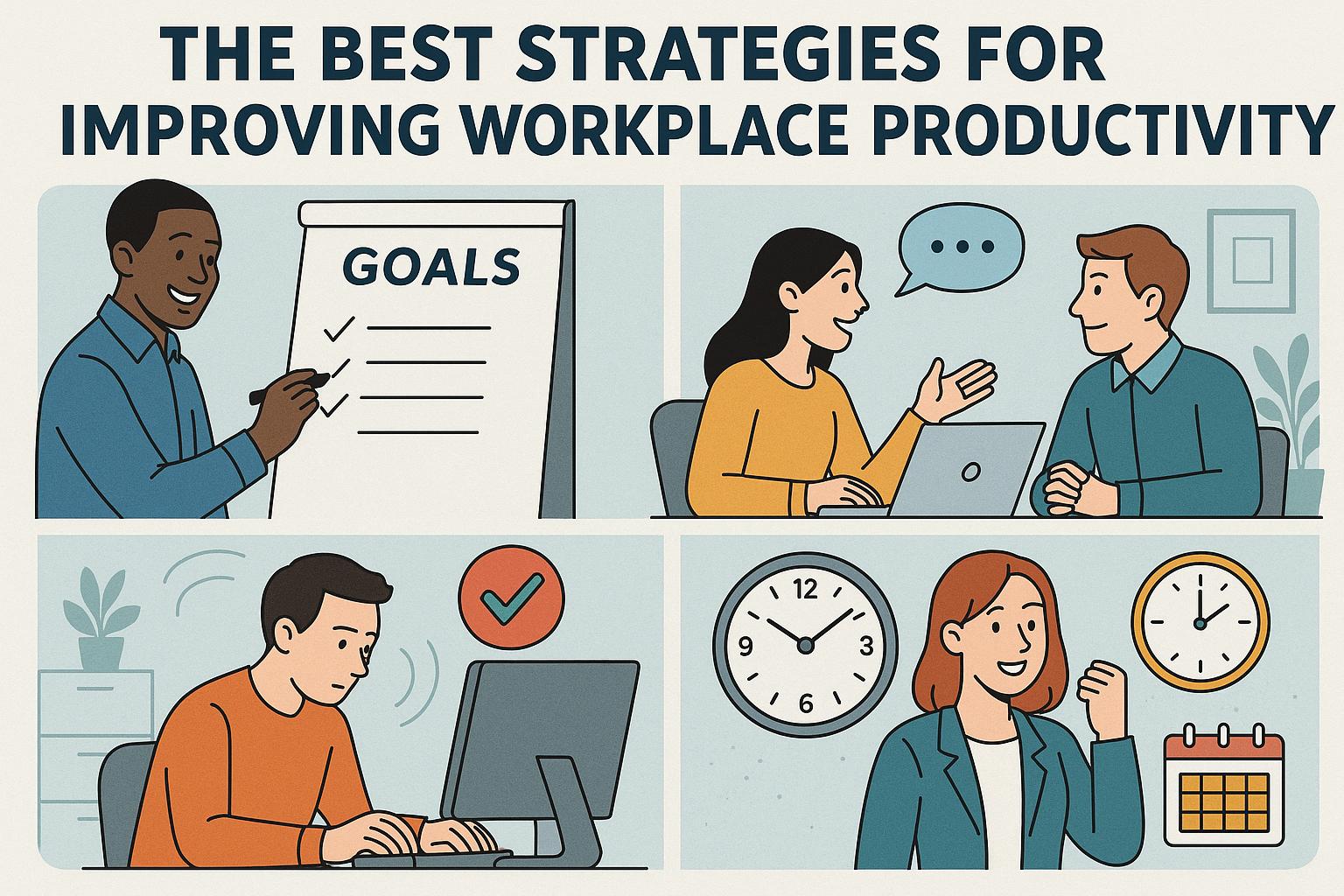
Effective communication is one of the pillars of productivity in the workplace. Facilitating clear and efficient exchanges of information can significantly boost productivity. Implementing robust communication tools and protocols ensures that messages are conveyed accurately. Encouraging regular meetings and providing platforms for feedback can also enhance communication. In today’s globalized work environment, where remote work is increasingly prevalent, maintaining seamless communication becomes even more critical. Digital tools like instant messaging apps, video conferencing platforms, and centralized information repositories play a vital role in ensuring that team members stay connected despite geographical barriers. By fostering an environment where open communication is valued, companies can harness collaboration as a driving force behind productivity.
Utilizing Technology
The adoption of technology solutions can tremendously impact productivity. Leveraging tools such as project management software and collaborative platforms can simplify tasks and improve coordination. Organizations may consider integrating AI-powered solutions for automating routine tasks, thereby freeing up valuable human resources for more strategic tasks. Technology can also facilitate data-driven decision-making, giving businesses insights that were previously inaccessible. By adopting cutting-edge tools tailored to their industry, companies can streamline operations, minimize human error, and stay adaptable to market changes. For further reading, consult here.
Streamlining Processes
Identifying and eliminating inefficiencies in work processes can lead to significant productivity gains. Streamlining operations involves refining workflows, reducing redundant steps, and aligning processes with company goals. Techniques such as Lean Management and Kaizen can help in creating more efficient workflows. These methodologies encourage continuous improvement by eliminating waste and involving employees in problem-solving processes. By embracing such practices, companies not only ensure that their operations are leaner but also cultivate a culture of efficiency within the workforce. Periodic reviews and tweaks to processes can help organizations adapt to new challenges and maintain their competitive edge.
Empowering Employees
Employee empowerment plays a critical role in fostering a productive environment. By involving employees in decision-making processes and providing them with autonomy, organizations can boost morale and motivation. Upskilling employees through continuous training programs also equips them to handle tasks more efficiently. Empowerment begins with trust, leveraging the potential of every employee by giving them a voice and fostering a sense of ownership over their work. Companies that value employee input often see increased innovation and a greater commitment to company objectives. When employees feel valued and are given the necessary tools and training to succeed, they are more likely to contribute to the organization’s achievements.
Establishing Clear Goals
Defining clear and measurable goals provides direction and purpose to employee activities. Utilizing the SMART goals framework—Specific, Measurable, Achievable, Relevant, Time-bound—can help in setting practical targets. Ensure that goals align with both individual and organizational objectives to maintain focus and motivation. By having a clear understanding of what is expected, employees can direct their efforts more efficiently and are held accountable for their performance. Moreover, well-defined goals can act as benchmarks for success, allowing organizations to evaluate progress and make necessary adjustments to maintain momentum.
Creating a Healthy Work Environment
A conducive work environment is vital for sustaining high productivity levels. This involves not only the physical workspace but also the organizational culture. Encouraging a healthy work-life balance, recognizing achievements, and promoting a positive atmosphere all contribute to enhancing overall productivity. A workspace that caters to the well-being of its employees can see improved retention rates and reduced absenteeism. For insights on developing a supportive work culture, visit this page. It’s essential for companies to invest in ergonomic designs, provide break areas, and foster inclusivity where employees from diverse backgrounds feel respected and valued.
Encouraging Regular Breaks
Encouraging employees to take regular breaks can paradoxically enhance productivity. Short breaks help reduce stress and prevent burnout, enabling workers to return to their tasks with renewed focus and energy. Adopting techniques such as the Pomodoro Technique can help establish effective break routines. Breaks serve as a mental reset, allowing for improved concentration and creativity when employees resume work. Encouraging a culture where staff are comfortable stepping away from their desks periodically can foster better work-life balance and support mental health, leading to higher overall productivity.
Implementing Continuous Improvement
Continuous improvement is a fundamental strategy for maintaining productivity over the long term. Regularly reviewing performance against set benchmarks allows organizations to identify areas for improvement. Encouraging an organizational culture that embraces change and innovation can drive sustainable productivity growth. This includes embracing new ideas, technologies, and methods that can further enhance efficiencies. By fostering an environment that promotes learning and adaptation, companies can stay ahead of industry trends and better respond to emerging challenges. Continuous improvement should be ingrained in the company’s ethos, motivating employees to seek excellence in every task they undertake.
This article was last updated on: April 19, 2026